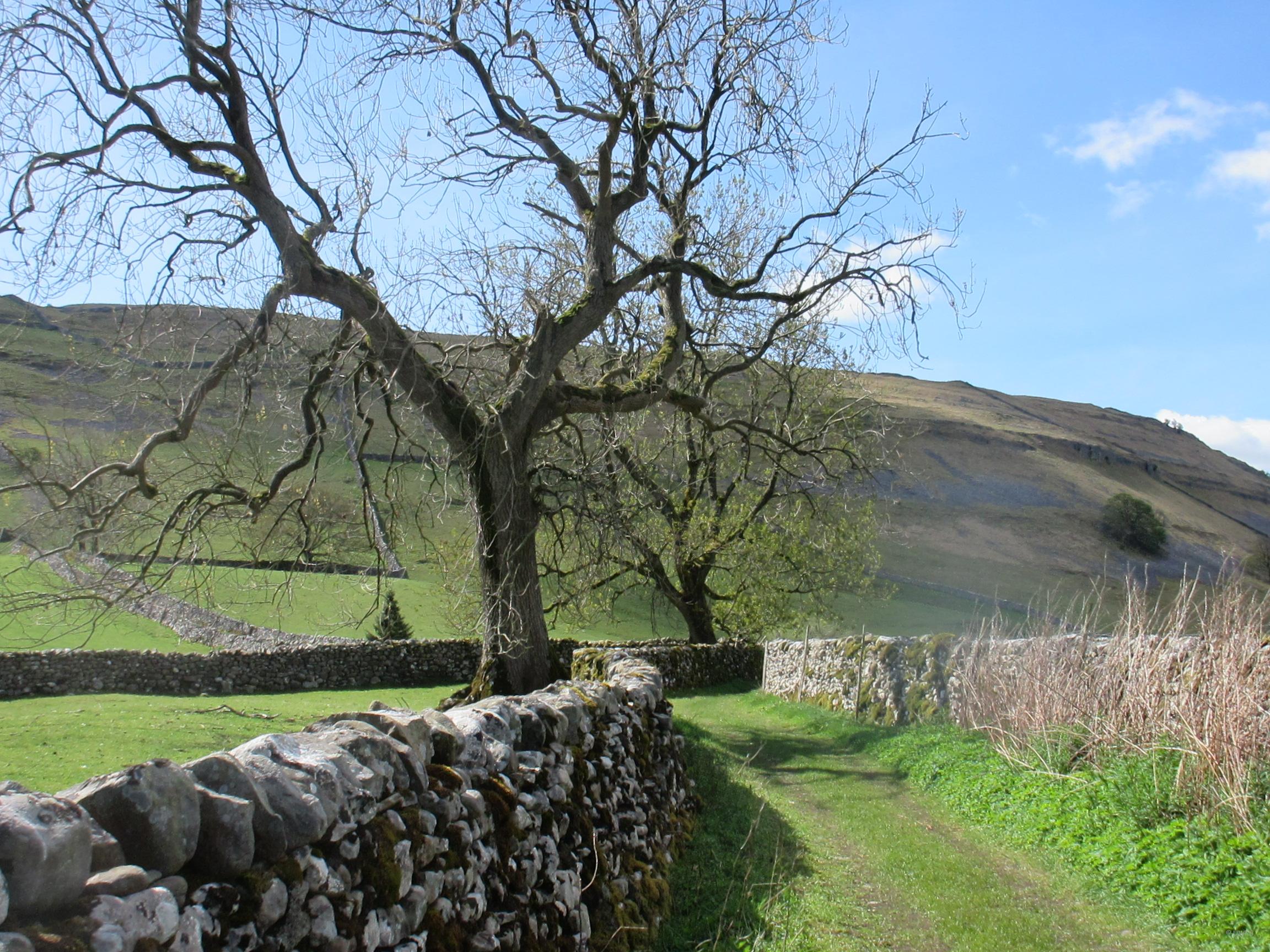
Wigglesworth Hall, its people and story……..
The History Group was unable to make a visit to Wigglesworth Hall, near Hellifield, now a large and busy dairy farm, but were very interested in identifying the story and early social history of the Hall and lands, which was presented at an indoor meeting on the 26th February. This revealed connections with many familiar notable families in our area.
An “enclosure” belonging to a man named Wincel was indicated in the 1086 Domesday Survey, and the small community became known as “Winchelsuuorde”. By the year 1200 much of the area, including “Wigglesworth”, was possessed by Fountains Abbey which was founded in 1137 by Cistercian monks from Clairvaux, France, and held by a Norman family of de Arches.
De Arches remained at Wigglesworth for over 100 years, a powerful and influential family, until a daughter named Beatrice inherited the property and married Reginald de Knoll which brought the manors of Wigglesworth and Starbotton together. Their son, Elyas, is reputed to have built the original Hall in the 14th century.
A successive marriage resulted in Wigglesworth Hall and lands being occupied by Adam de Hammerton of Ribblesdale and their male line continued until 1537 with marriages to daughters of William de Radcliffe, Sir John Tempest of Bracewell, Sir John Assheton, and Sir William Plumpton of Grassington. It was about 1500 when Isabel Plumpton, married to Sir Stephen Hammerton, is considered to have had the great Tithe barn built, which served all the Long Preston parish, but which was seriously damaged by fire in 1958.
Sir Stephen Hammerton became involved in the revolt against the Pilgrimage of Grace and the Dissolution of the Monasteries, particularly concerned with Sawley Abbey. He was found guilty of treason and was executed in 1537. Wigglesworth manor was within the major part of the estate which was forfeited to King Henry VIII, and the manor was subsequently granted to Sir Thomas Holcroft, later transferred to Sir Richard Sherburn of Stoneyhurst, a staunch Roman Catholic.
The Sherburns made extensive alterations to Wigglesworth Hall, which included a secret Priest hole, but this Tudor house was largely replaced by a Georgian rebuild. Evidence of earlier relics were identified later, including a small part of a flagged passage four feet below the surface reputed to run under the River Ribble to Hellifield Pele tower. The Hall had remained in the Sherburn family for well over 100 years, but there was a succession of new owners from the early 17th century into the 20th century. The land was always farmed but when the Sherburns were in occupation in 1575 the Hall was used as a dower house for elderly and widowed women, recusants as they refused to conform to Protestant worship. The men however usually did conform in order to avoid financial penalties on their estates.
However, the Wigglesworth family re-emerged in the 16th century manor of Conistone, for centuries held by the family de Hebden but which came to the Tempests of Broughton. In 1568 Richard Tempest sold the manor to Alexander Rishworth, but before the sale he leased a farmhold, buildings and lands to his tenant Richard Wigglesworth. Richard was able to buy the manor when the lease expired, and which his son Thomas inherited. The family continued succession and by 1681 it was owned by a further Richard, by which time the original lands had increased by purchases to be one of the larger farms in Conistone township.
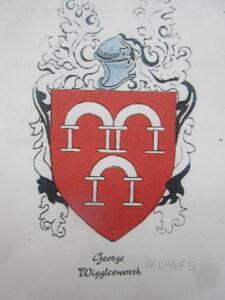
Wigglesworth Crest
Richard had married Anne Leyland in 1677, and when she died he married Elizabeth Topham. Eventually the extensive property was inherited by Richard’s two brothers, Thomas and William. Thomas continued with the estate while William became a prosperous tanner at Cottingley. When Thomas died in 1741 he left the entire property to William, which included land in Bolton Abbey, Otley and Conistone. William transferred the Hemplands houses and land to Richard Horner, the Conistone house and lands to Robert Topham……..and here we concluded our delving into the Wigglesworths and Wigglesworth Hall.
Postscript : During the early 19th century a family of Wigglesworths used the Coat of Arms of the de Arches, namely three Saxon arches.
With thanks for the use of the Wigglesworth Hall website, and
Arthur Raistrick’s book “Old Yorkshire Dales.
Phyllida.