Six keen botanists met at the bridge at Yockenthwaite on an overcast and muggy morning to explore the meadow edges of the River Wharfe. While the main meadows had been cut a couple of weeks earlier, the riverside edge and some of the steeper slopes were still full of flower. Particular highlights included large patches of Betony Stachys officinalis, Devil’s Bit Scabious Succisa pratensis, Harebell Campanula rotundifolia and huge areas of Common Knapweed Centaurea nigra.
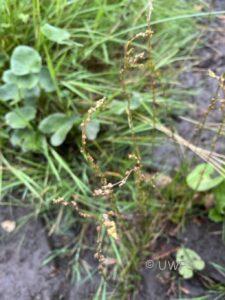
We spent a bit of time by the river identifying a couple of different rushes, Jointed and Hard Juncus articulatus and Juncus inflexus which at one point involved peeling a rush stalk to look at the structure within. Another lovely find on the river bank was a patch of Marsh Arrowgrass Triglochin palustris which is found on damp grassland on calcareous soils, fens and meadows – a perfect description of the site.
Not only did we enjoy the flora but we also spotted the claws of Signal crayfish left behind by a mustelid of some type – otter or mink – we couldn’t be sure. And we were also able to see a number of birds including Nuthatch, Grey Wagtail and Dipper.
We had lunch sitting amongst the old flower spikes of Greater Butterfly Platanthera chlorantha and Fragrant Orchid Gymnadenia conopsea in a lovely patch of Limestone grassland. Unfortunately, the area is being invaded by Bracken Pteridium aquilinum.
We gradually worked our way back to the bridge having enjoyed our time by the Upper Wharfe. Despite weeks of dry weather, the banks were still remarkably green making for a very pleasant trip.
Report and photographs by Jane Welsh
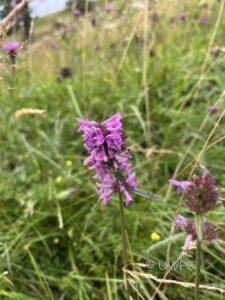
Betony Stachys officinalis
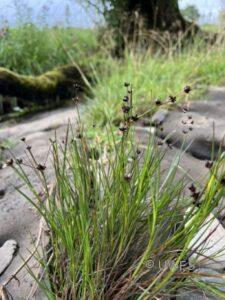
Jointed Rush Juncus articulatus