A Study of
THE INFLUENCE OF THE YORKE FAMILY OF BEWERLEY
Someone was carefully tending the small flower beds beside the Bewerley Grange Chapel when our group arrived. While we appreciated the atmosphere of this ancient chapel, Sandie disclosed its story and pointed out significant features which particularly related to Abbot Marmaduke Huby of Fountains Abbey in the late 14th century. Following this we progressed with the Yorke family……
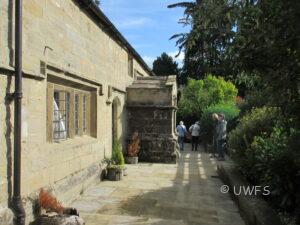
Bewerley Grange Chapel. Photo by Phyllida Oates.
Bewerley is mentioned in the Domesday Book when it was part of the estates of Gospatric, Earl of Northumbria. After the Conquest the estates passed to the Mowbray family, and in 1175 Roger de Mowbray sold the estate to Fountains Abbey, which established a grange in Bewerley, with a chapel built by Abbot Marmaduke Huby in the 15th century. The Abbot’s House on Glasshouses road was built by Father Hicks in the late 16th/early 17th century, which became Bewerley Old Hall, known as Tudor House later, and eventually was the Yorke family’s gardener’s house. ( As Tudor House its structure did contain many interesting 16th/17th century features, and a typical Elizabethan ‘knot garden’.) After the Dissolution of the Monasteries the ownership of Bewerley was fragmented, but in 1674 the manor of Bewerley and some land was acquired by the Yorke family and remained with them until 1924. The Marmaduke Huby chapel was used as a school, and possibly for holding illicit masses by the Catholic Yorkes. By the 18th century the family replaced the Chapel school with a new school at Bridgehouse Gate for Pateley Bridge children, mainly boys at that time.
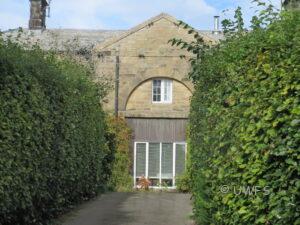
Stable Block. Photo Phyllida Oates
The Yorke family had long been influential in York in the 15th Century, with Sir Richard as Lord Mayor, M.P in Parliament, and highly acclaimed in the wool trade. Successively, Sir John Yorke, his grandson, Member of Parliament for Richmond in 1661, was the builder of Gouthwaite Hall.
In Nidderdale the Yorke family were content to manage their growing estate, with tenanted farms, quarrying and mineral rights, and an inclination towards the sporting life, an estate which extended over 16,000 acres. They originally lived in Middlesmoor and acquired the dalehead areas of the Stonebecks and the manor of Ramsgill, (and Appletreewick in Wharfedale.) By the 18th century the Yorke family were the largest landowners in Nidderdale. Farming tenants were also miners for five or six hours a day, and women were involved in the growing textile industry by home spinning of flax and weaving linen. Generations of the family endeavoured to sustain the wellbeing of the land, the tenants, and the many local trades, all of which developed the influence of the Yorkes.
It was important to make good marriages, to sustain the security of estates, and the Yorke family made such connections including Ingleby of Ripley, Lister, Darcy, Assheton, but most significantly Norton. Sir John Yorke of Gouthwaite Hall married Mary Norton, an heiress who added Bewerley to the Yorke estate by outright purchase in 1674. Gouthwaite Hall had to be demolished when Bradford needed to build a reservoir which flooded all that area…..the area chosen particularly due to the existence already of a post-glacial moraine.
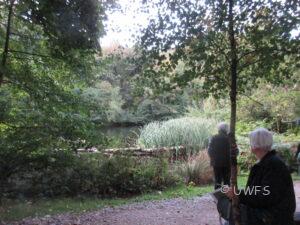
Fishpond Wood. By Phyllida Oates
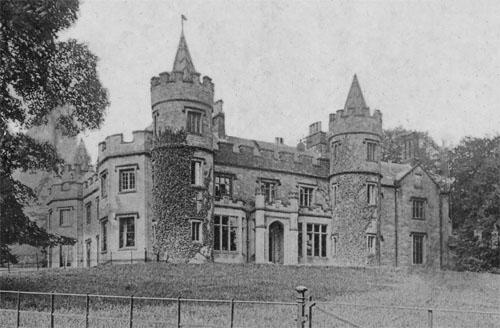
Bewerley OLD Hall in 1674 was an Elizabethan house where the Yorkes lived until they built their NEW Hall in 1821 which became a castellated mansion in the Scottish style, with turrets and tower……. (there was continuous one-up-manship with the prominent Nidderdale family of Metcalfe who built their impressive Castlestead mansion, on land bought from John Yorke.
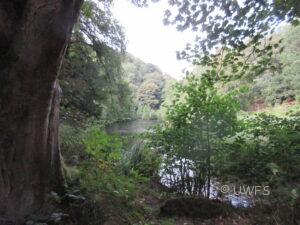
Fishpond Wood 2 Photo Phyllida Oates
While maintaining the working land, the Yorke family was increasingly involved in developing the value of landscape for pleasure and made a major impact on the landscape around Bewerley. In the 18th century John Yorke became involved with the “English Landscape Movement”, which was associated with Capability Brown. Yorkes Folly was built high on Guisecliffe around 1740 at a time of depression, bad weather and general unemployment, which gave paid employment for impoverished local craftsmen and farmhands. (The depression developed through structural shifts in society driven by the Agricultural Revolution. Landowners were enclosing common lands; there was a rapid population growth which outpaced traditional jobs; and early industrial machinery was replacing manual handcrafts. All this transition moved workers from stable rural routines into volatile economic unsettlement.)
The ancient and lush woodlands of Guisecliffe and Shrikes, sweeping steeply down into the Nidd valley and created over centuries amongst massive Brimham-type rocks, were nurtured as part of the Yorke pleasure-giving estate. The smaller Fishpond wood was also long established, and the pond is believed to have monastic origins, providing fish for their larder. The Yorkes introduced specimen trees here and enlarged the pond by connecting nearby streams. Extensive pleasure gardens and grounds were developed around the Hall, which provided local employment – all were maintained for a lasting effect on the local landscape, sustaining natural life and benefiting all people. It is still a well-used woodland, carefully maintained, and an environment appreciated by groups of children studying natural science.
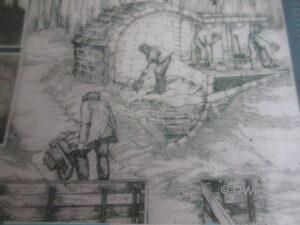
Constructing a Ice House. (Photo From a display board)
In Fishpond wood, the ice house was certainly built by the Yorkes, and has been well restored. Such buildings were commonly used by country house kitchens before refrigeration. Ice houses were built of thick brick, stone and wood walls, combining heavy insulation of bracken, straw, wood shavings with winter-harvested ice packed into the deep cone-shaped ice chamber. Winter ice was taken from rivers, lakes and ponds, and could remain frozen in the ice house for months and keep the stored food fresh in the adjoining chamber.
Although the Yorke family continued to expand their nearby estate through the 1800s, they did need to sell parts of their outlying land holdings while they heavily invested in their property and maintained their pleasure landscaping. BUT expenses became overwhelming and, when the last squire of Bewerley Hall, Thomas Edward, died in 1924 the Hall and lands were sold to pay extensive estate duties. The final downfall was after the First World War, with heavy taxation and postwar economic pressures. Bewerley Hall was demolished a year later – the succeeding family moved to their other established estate at Halton Place in Halton West, Ribblesdale. We were however able to view the old stable block and laundry block, now converted into private residences.
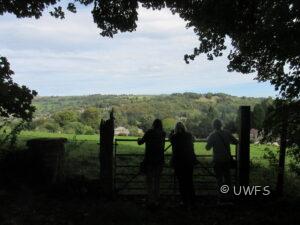
View from Ice House. By Phyllida Oates.
Phyllida Oates
Much is known of the Yorke family because of a considerable number of documents carefully collated by the wife of Major J.E.E. Yorke, in Halton Place, Ribblesdale, in the mid-20th century.
Other sources of information are from relevant websites and “A History of Nidderdale”.